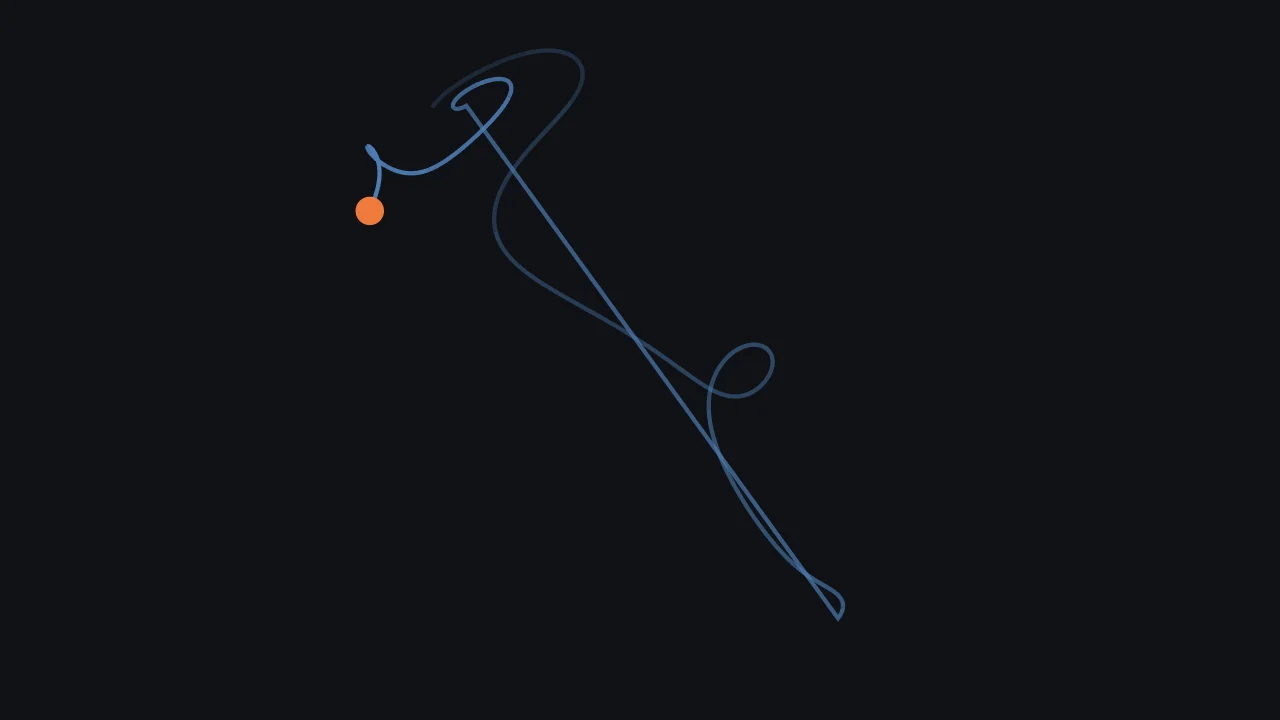
Thomas attractor
Thomas. A turning chaotic attractor: one smooth path that never closes.
ẋ = sin y − bx
ẏ = sin z − by
ż = sin x − bz,  b = 0.18

Nine wandering LFOs for Ableton Live. Wind, sea, a falling leaf, a moth at the moon: each one a tiny simulation that moves any parameter, smooth and never quite the same.
Checkout by Creem; the price includes VAT. After buying, Creem e-mails you a link to download a ZIP with Reik.amxd (the same file for Windows and macOS) and the manual. Terms and refunds
An LFO goes round and round. Reik wanders.
A classic LFO repeats one shape for ever: after a minute your ear knows exactly where it goes next. Reik never repeats, and it never jumps either. Each of its nine sources is a tiny simulation of something that moves on its own: wind in the grass, the swell under a raft, a leaf falling through restless air, a moth circling the moon, a dog pulling at its lead.
The motion is random or chaotic, but always smooth, so it suits a filter, a pan, a send to a reverb, the pitch of a pad or the position of a sample. It sounds the way things move outside: calm for a while, then a gust.
Every simulation gives two outputs. A is its main motion, B is a second quantity of the same scene: the wind and its calm turbulence, the dog and its owner, the two coordinates of the moth. They are related but never the same, so two parameters moved by A and B sound like one gesture, not two machines.
With the seed fixed, the motion belongs to the song: the same place in the arrangement always moves the same way, wherever you start playing, and a render sounds exactly like playback. Open the lock and every Play sets off on a new walk; when one sounds right, close the lock to keep it.
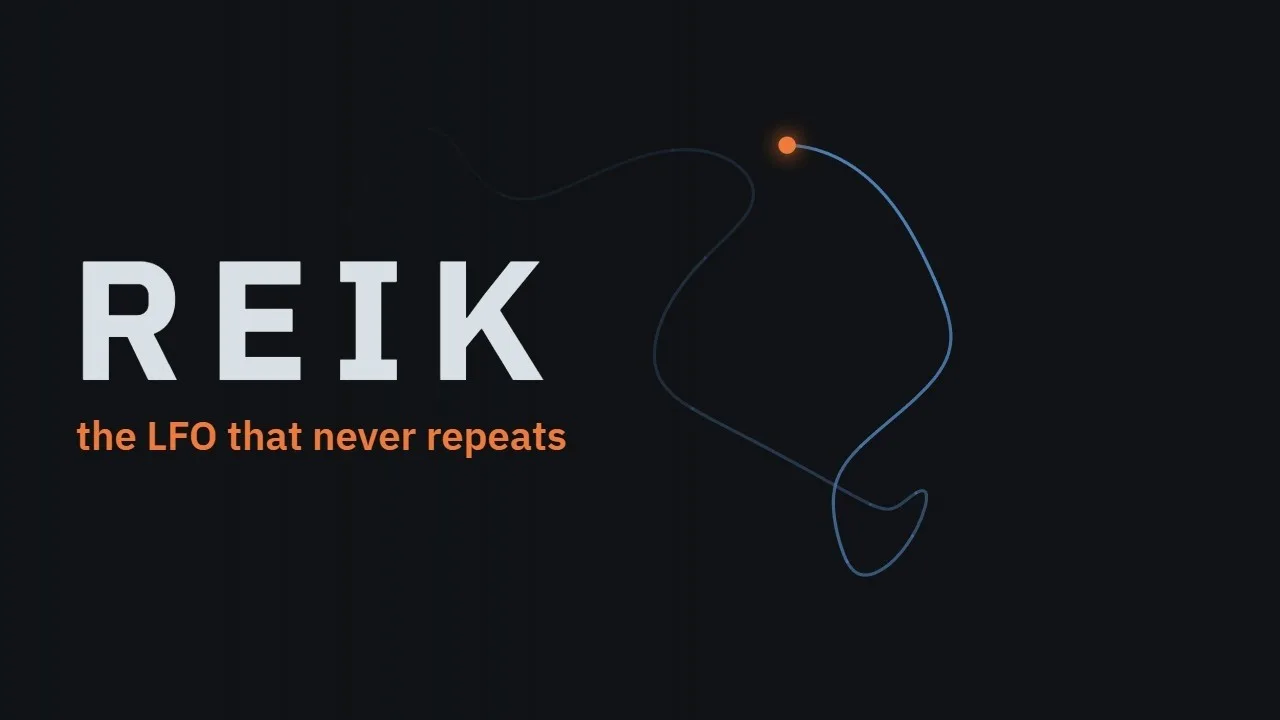
Thomas. A turning chaotic attractor: one smooth path that never closes.
ẋ = sin y − bx ẏ = sin z − by ż = sin x − bz, b = 0.18
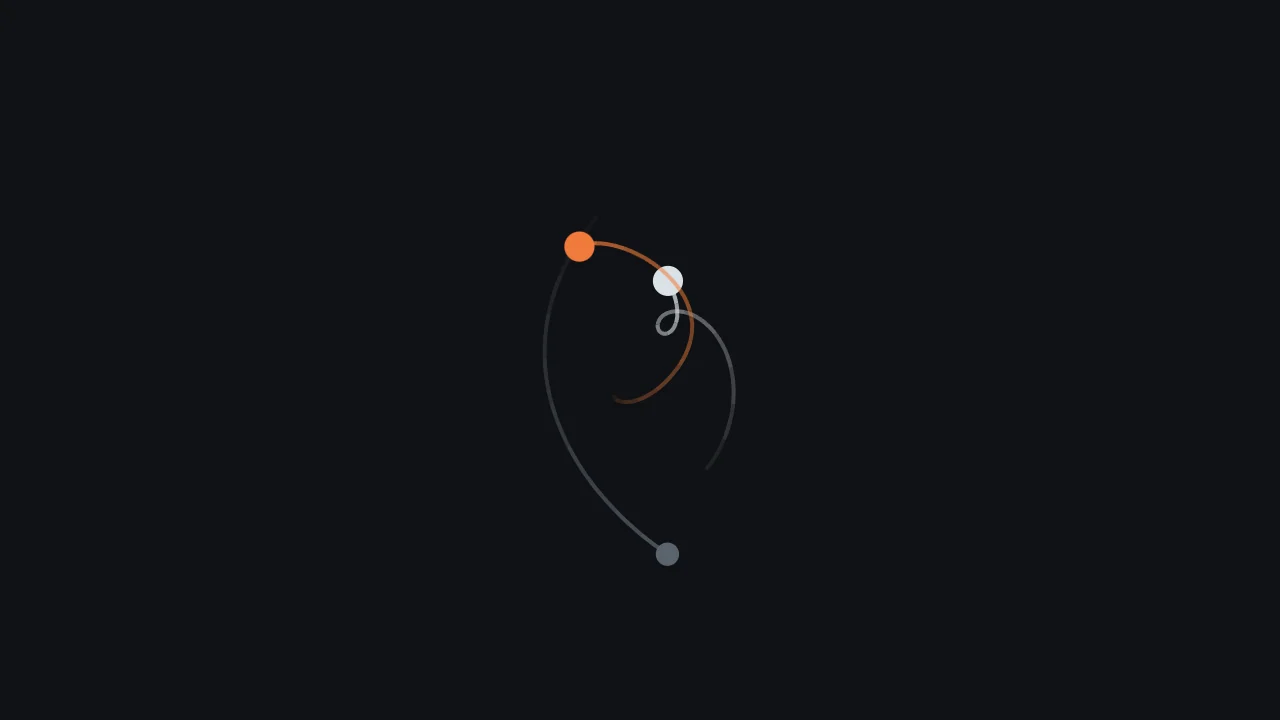
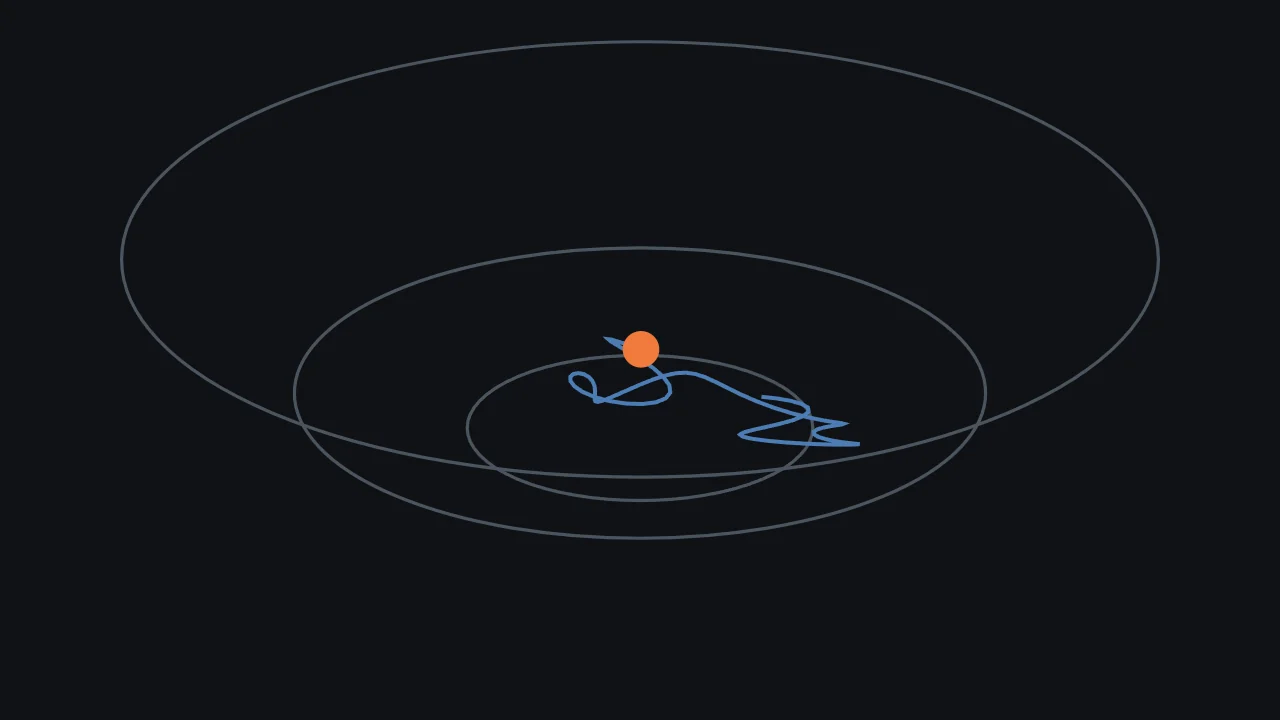
Three bodies. Three bodies pulling at each other in a weak field that keeps them together.
r̈ᵢ = Σⱼ (rⱼ − rᵢ) / (|rⱼ − rᵢ|² + ε²)^3/2 − k·rᵢ
ε = 0.15, k = 0.08
Pollen. A grain of pollen jittering in a bowl.
ẍ = −γẋ − ∇U(x) + σξ(t)
U = k₄r⁴/4 + k₂r²/2
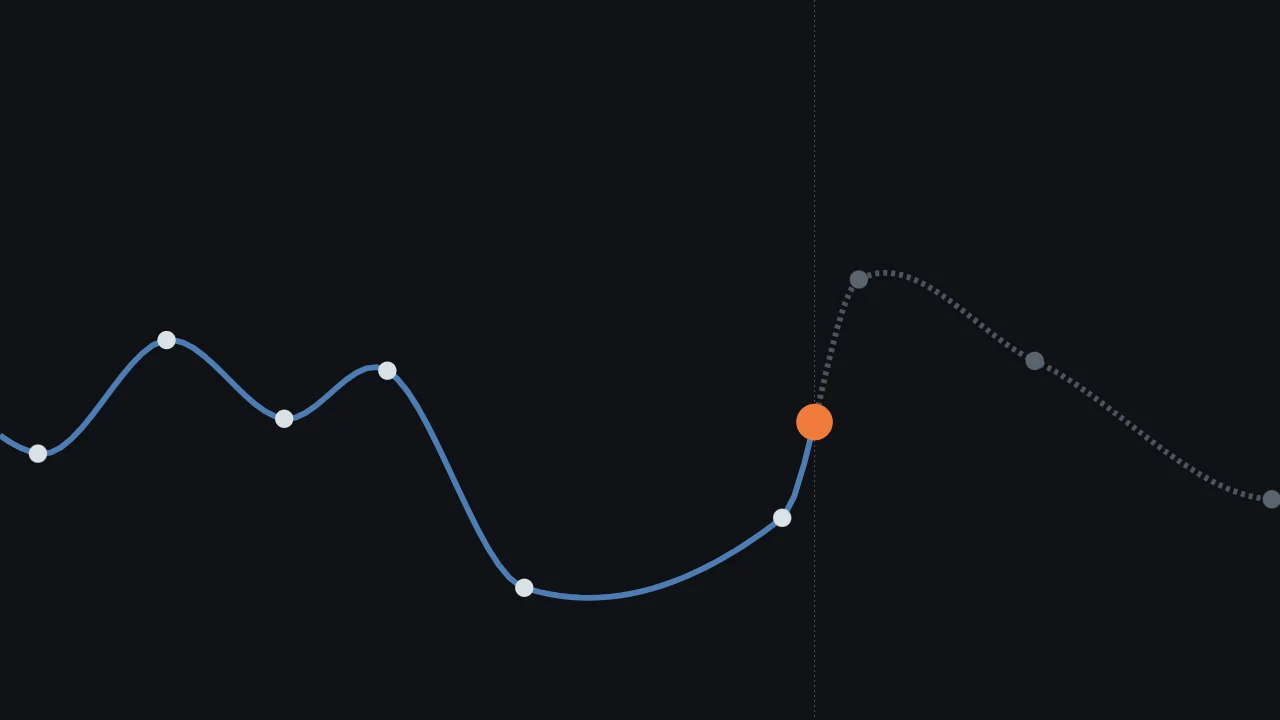
Smooth random. A smooth curve through random points that come at random moments; you can see the next ones coming.
points at random moments, mean gap 1.7 s
a Catmull-Rom curve through them
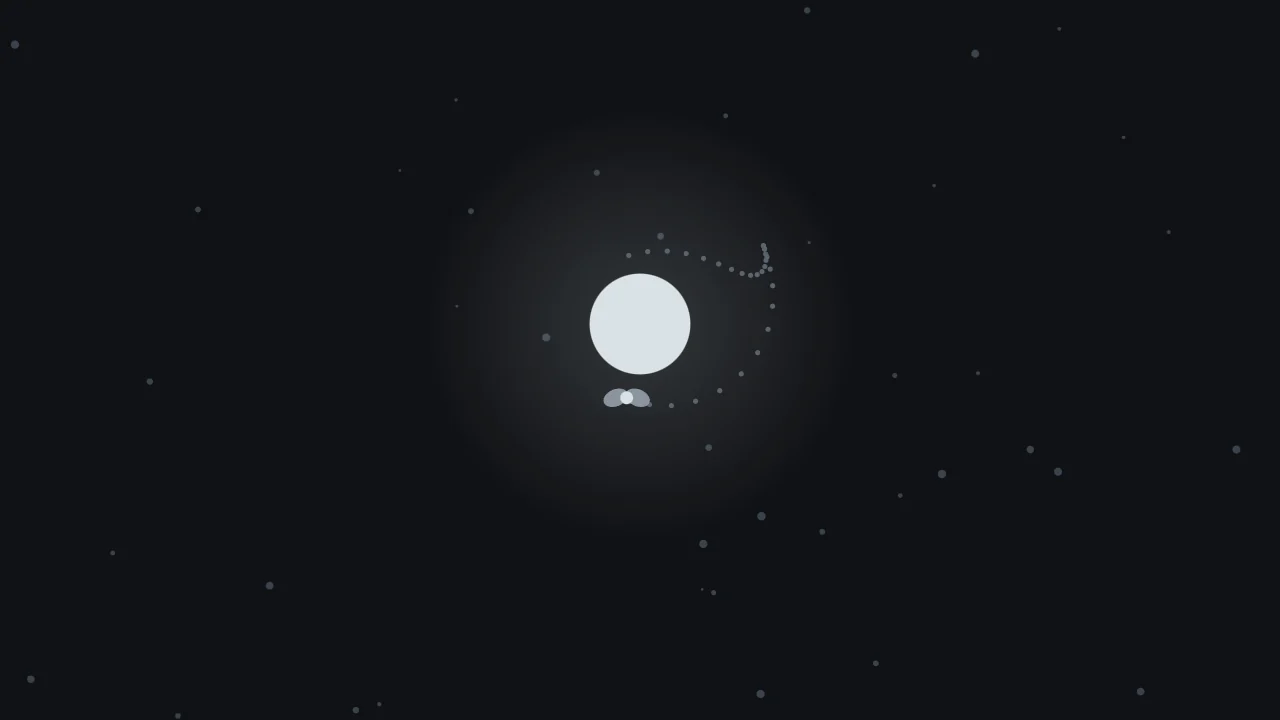
Moth. A moth at the moon: short flutters, then a sudden long flight.
flight time T: P(T > t) ∝ t^−1.3
short turns near the light, rare long flights
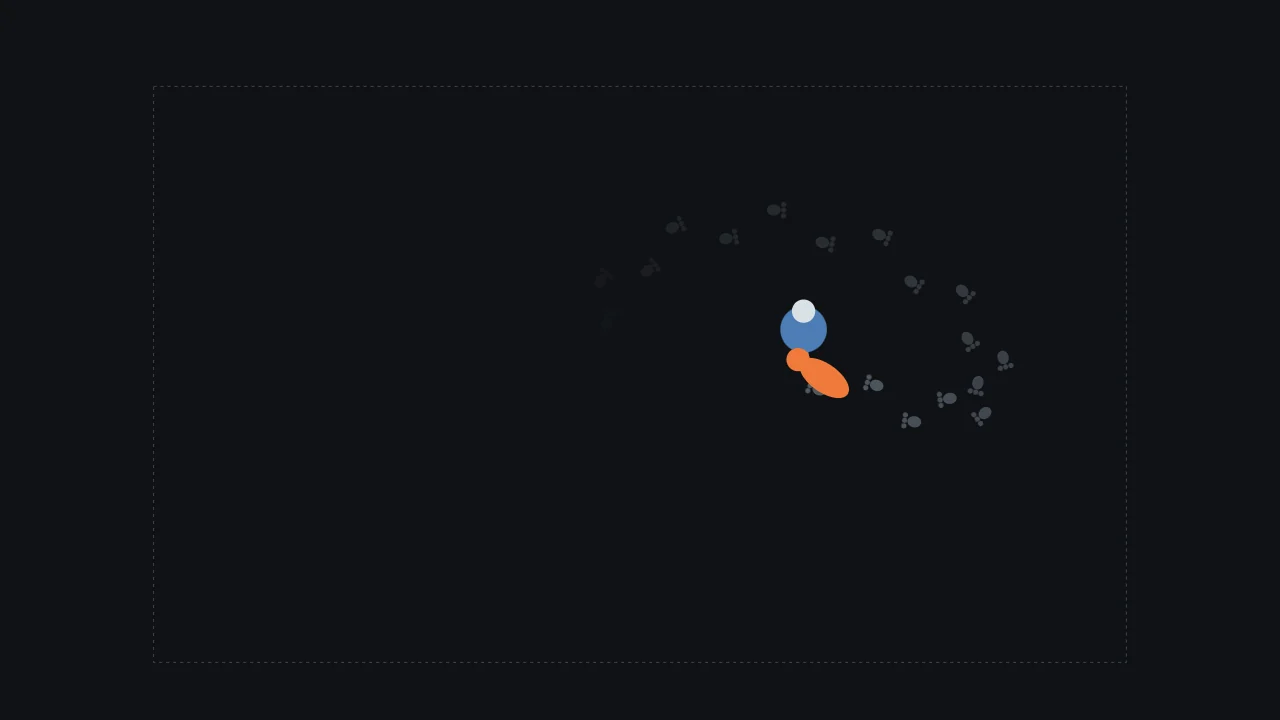
Dog. A dog on a lead: the owner wanders, the dog follows on a spring.
owner: a smoothed Ornstein-Uhlenbeck walk
dog: on a springy lead, off to sniff now and then
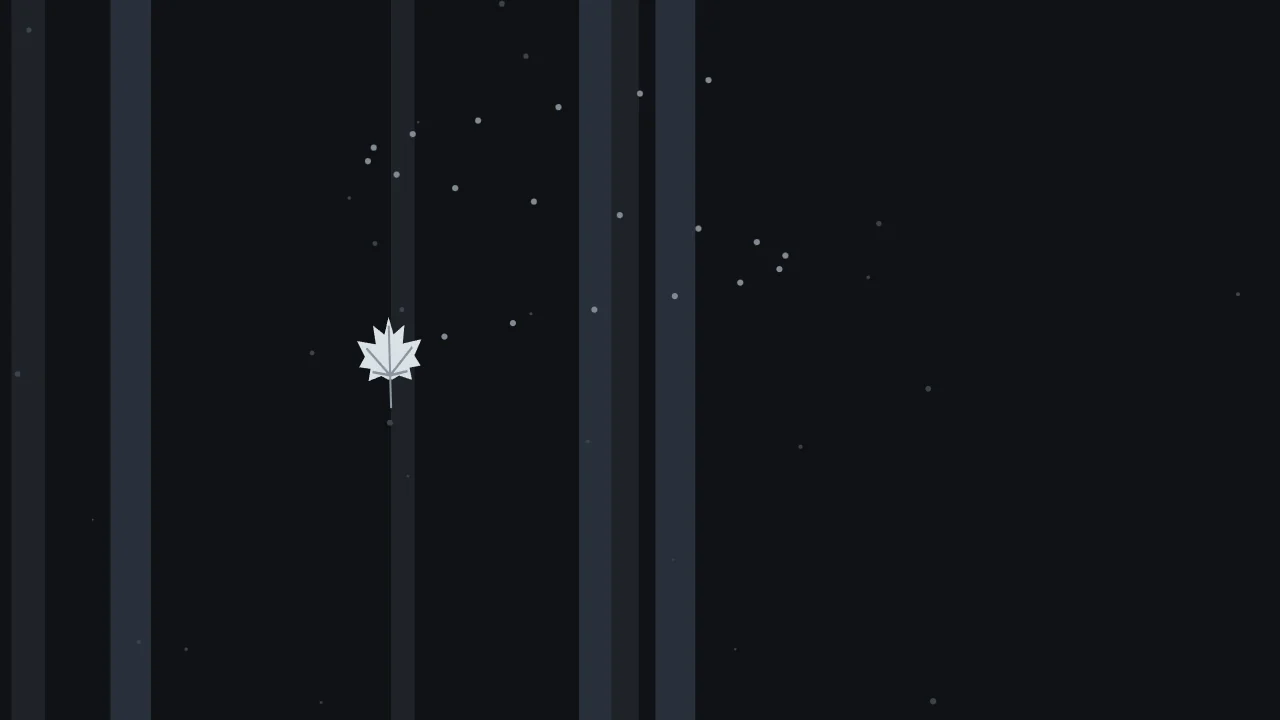
Leaf. A maple leaf falling through restless air.
thin plate falling in air:
drag ∝ (A − B cos 2α)·|v|v
lift ∝ sin 2α·|v|v, + turbulent air
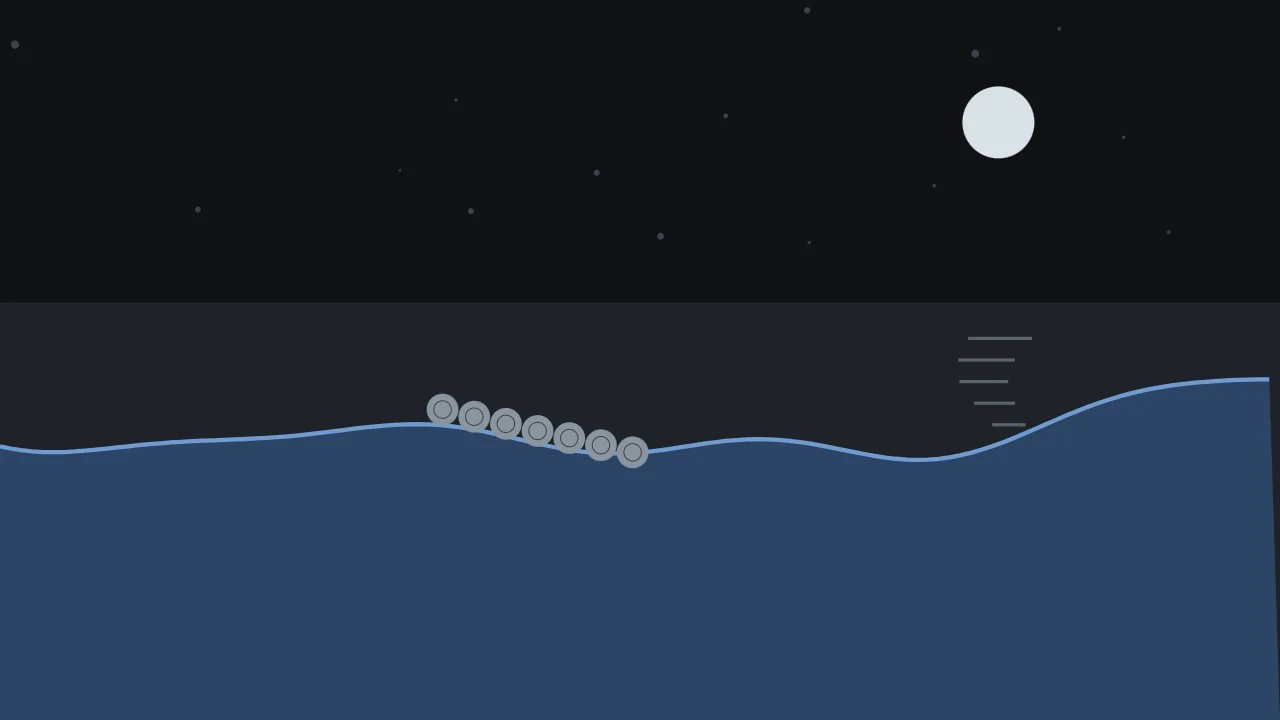
Sea. The open sea, and a raft of seven logs rocking on it.
η(t) = Σ aᵢ cos(ωᵢt + φᵢ)
aᵢ² ∝ S(ωᵢ), JONSWAP spectrum, 30 waves
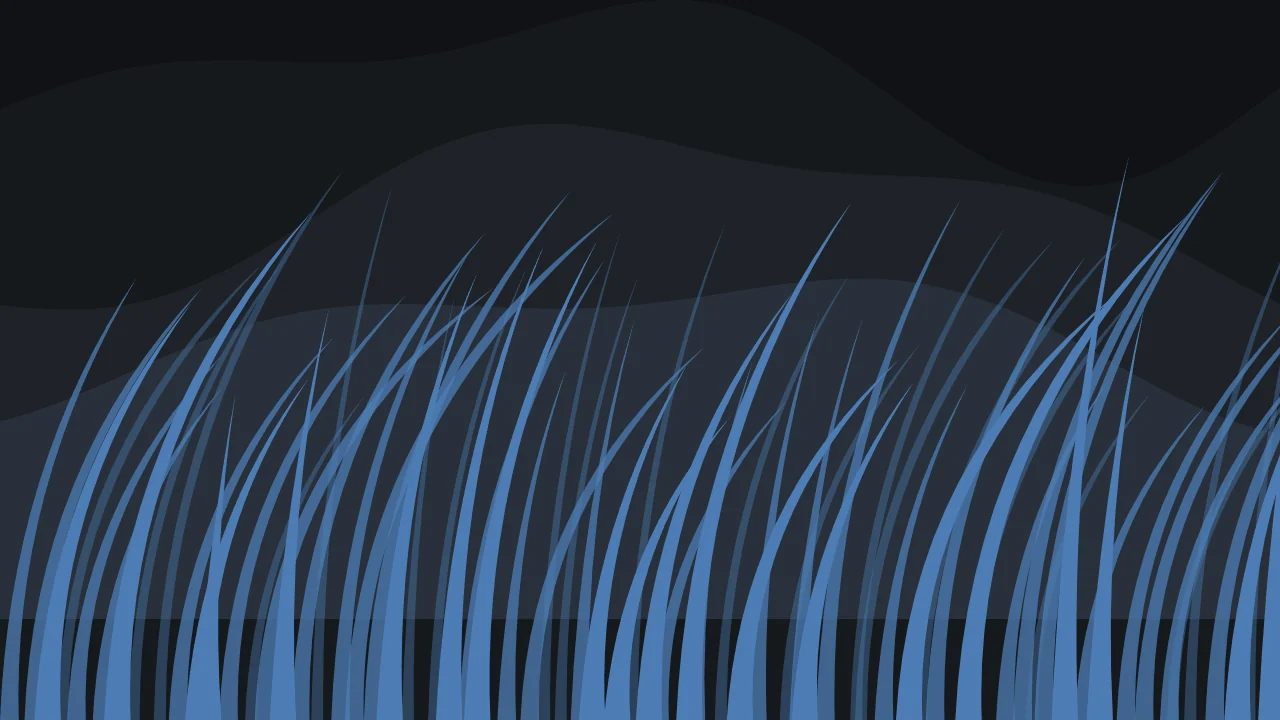
Wind. Wind in tall grass under the mountains.
dx = −(x/τ) dt + σ dW
+ gusts at random moments, about every 8 s
Each source is named after what it computes; the picture is what it looks like. In the device, each click on the Source square moves on to the next one.
Output A of each source at speed 1× and seed 1. The scenes above are drawn to show the idea; in the device each one is the simulation itself.
| Control | What it does | Range |
|---|---|---|
| Source | Which simulation moves the LFO. Click the square for the next of the nine; after the last comes the first. | 9 sources |
| Speed | How fast the simulation runs: a time scale, not synced to the set's tempo. At 1× most sources change at about 0.05–0.3 Hz. | 0.05–8× |
| Smoothing | Extra smoothing of both outputs, from none to a long, slow glide. | 0–10 s |
| Depth A | Scales output A for all its targets. Below zero it turns the motion upside down. | −100 to +100% |
| Depth B | Scales output B, the second quantity of the same simulation, for all its targets. | −100 to +100% |
| Seed | The die. The same seed gives the same motion at the same place in the song, every time you play it and every time you render. With the lock open, click the die for a new walk. | 1–255 |
| Seed Mode | The lock. Closed (fixed): the motion comes from Seed. Open (random): every Play and every click on the die start from a new random seed, and a render draws its own. Closing the lock keeps the seed playing. | fixed, random |
Click MAP and Reik opens a window over the whole device with the list of its targets, up to sixteen, from A or from B. + A or + B adds a row; click its own MAP, then any parameter in your set.
Each target has its own range, a band on its slider over the dots its motion has passed through. Drag an end sideways to move it, or the band between to move both; values shows the ends as numbers instead. lin or exp sets its curve, inv turns its motion upside down and M mutes it, holding the parameter where it was.
One click switches a target between the two outputs. The clone button copies a target's settings into a new row that waits for its own MAP, so a pair of filters can move as one. Point at a parameter's name for UNMAP: the row keeps its settings and waits for a new parameter.
A mapped parameter turns grey in Live and moves within the range you set, even if it sat at zero. Remove the target and the parameter goes back to its own value. Targets and settings are saved with the set.
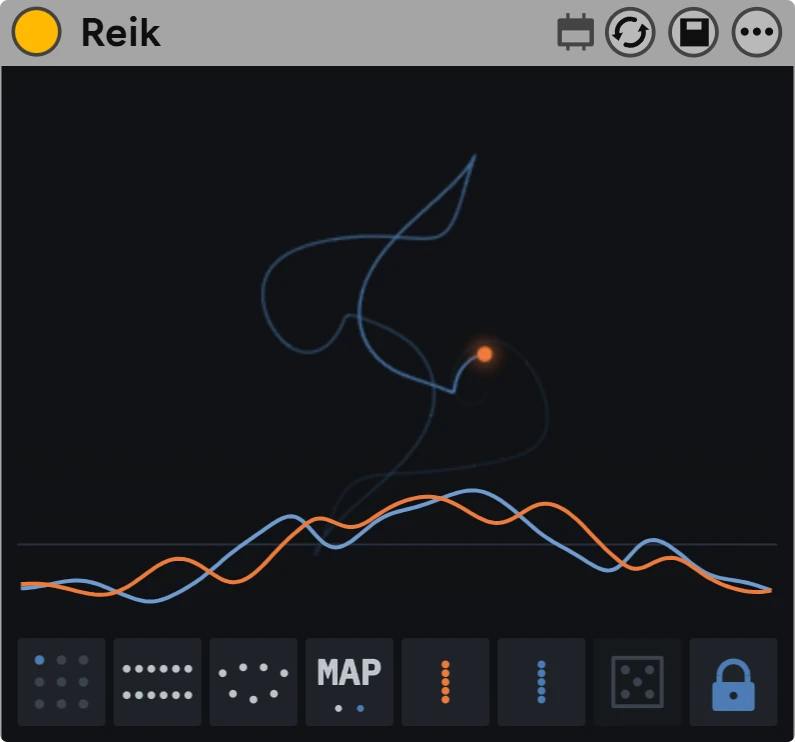
Most of the device is the scene itself, drawn live in the colours of the Plip Plop plugins, whatever theme Live is in. Along its bottom run the two outputs: A in orange, B in blue. Under it sits a row of eight small squares, each with a picture of dots that changes with its value.
Drag Speed, Smoothing or a Depth up or down to change it. A click on Source moves on to the next source; at the end of the row, the lock fixes the seed or sets it free, and while it is open the die rolls a new one.
Point at a square and its name and value appear above it. The MAP square shows with dots how many targets A and B have; the die is bright while the lock is open.
Every control, and every setting of every target (T1 to T16), is a Live parameter: automate it in the arrangement, move it from clip envelopes, or map it to MIDI, a key or Live's own LFO.
Ableton and Max for Live are trademarks of Ableton AG. Max is a trademark of Cycling ’74.